

Choosing resin flooring in sunlight means checking the proposed specification for a conservatory, garden-facing kitchen or room with large glazed doors. The appearance of the floor changes with the light, while material performance depends on the specified system. These five checks help you describe the room and ask useful questions about the proposed products, rather than rely on a general promise about every resin finish.
1. Assess resin flooring in sunlight before specifying
Note which windows receive direct sun, the usual time of day and where the strongest light reaches the floor. Photograph the room in the morning and afternoon if the light changes noticeably. Tell the installer about roof glazing, large doors and any seasonal use of blinds.
When planning resin flooring in sunlight, the room’s position and glazing help explain the conditions. Include how the room is heated and used through the year. A bright dining extension may have different conditions from an enclosed internal kitchen even if both use the same decorative colour.
2. Ask about the whole proposed system
Request the product names for the decorative layers and final protective finish. Ask what evidence supports their suitability for the conditions you have described. A claim about one topcoat does not establish the performance of every layer or confirm compatibility with a different manufacturer’s system.
As a product-specific example, Sika’s Sikafloor-304 W information lists UV resistance for that seal coat within its stated uses. It illustrates the kind of documentation to request. It does not mean that this product is included in a ProFlo quotation or suitable for every decorative floor.
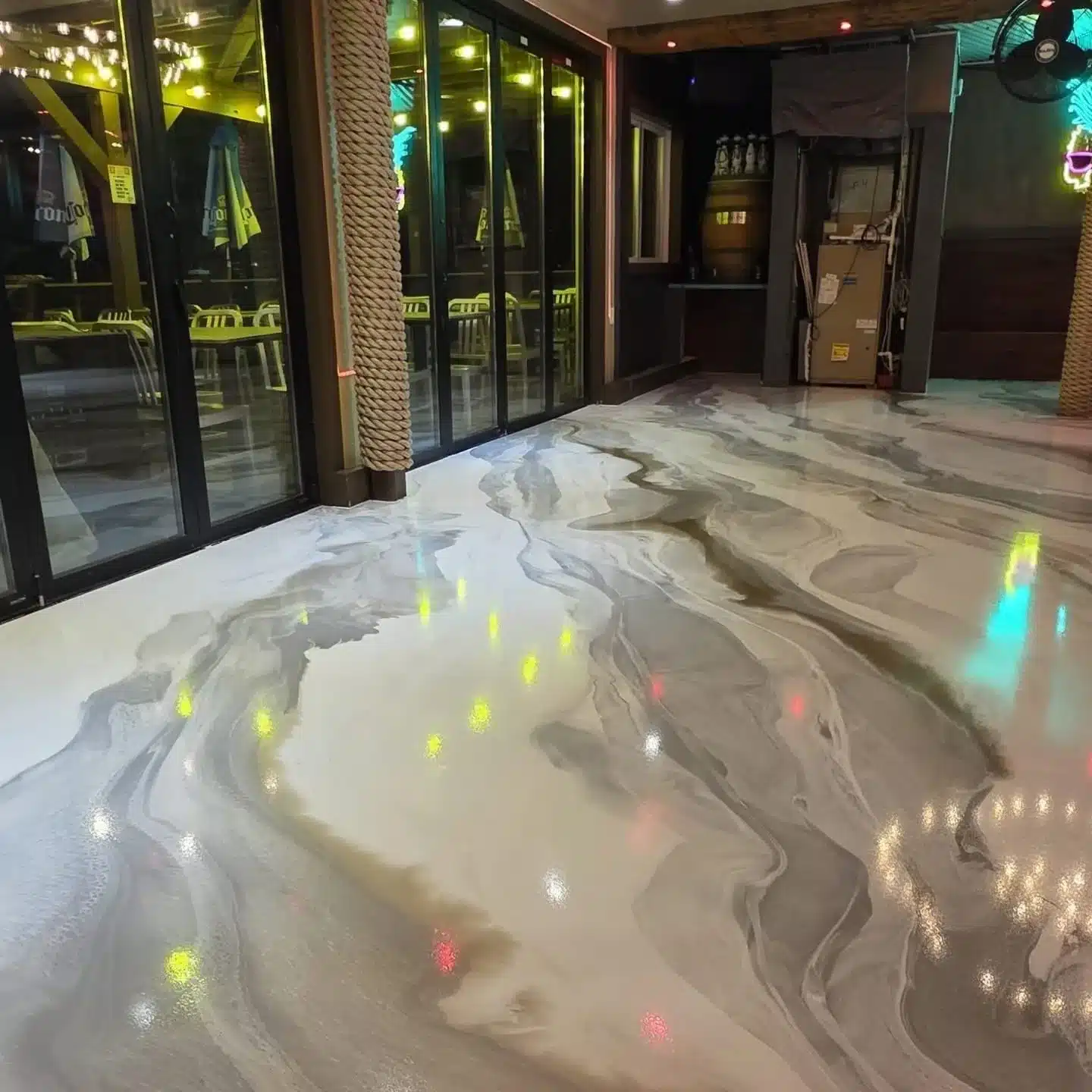
3. View resin flooring in sunlight and evening light
Place samples where the strongest daylight falls and where the floor is normally shaded by furniture. Look from the doorway and at a low angle as well as from above. Note how sheen, texture and colour appear under the lights you use in the evening.
Our Metallic colour guide explains the broader sample-selection process. For a sunny room, add the glazing and daylight observations to that process. A phone image can help communicate preferences, but screen settings and camera exposure can alter the colour you see.
4. Discuss layout, furnishings and shading
Tell the installer where large rugs or furniture will sit and whether the arrangement is likely to change. Ask how appearance variations might become noticeable when something is moved. Discuss appropriate protective pads and mat backings for the selected finish.
When choosing resin flooring in sunlight, distinguish between the way light makes a surface look and any change in the material itself. Ask whom to contact if you notice a change after installation and what records or photographs would help them assess it. Keep the product and care information supplied at handover.
5. Agree the expectations in writing
Ask the quotation to identify the specified products and any conditions or exclusions relevant to the room. Record the colour direction and the sample reviewed, including the expected variation of a hand-applied metallic design. Discuss the appearance and feasibility of a future local repair.
If the room has heating in the floor, provide the heating documentation as part of the same enquiry. Our heating coordination guide covers the sequencing questions. The choice of resin flooring in sunlight should sit alongside the assessment of temperature, substrate and use.
Plan a sunny-room flooring assessment
For Birmingham, Solihull and the wider West Midlands, send the room dimensions, photographs of the glazing and your preferred finish references. Our Metallic Epoxy service introduces the decorative option and our survey guide explains the first assessment. A clear brief for resin flooring in sunlight helps the installer evaluate your particular room and explain the evidence behind the proposed specification.